DPA Microphones
DPA 4088
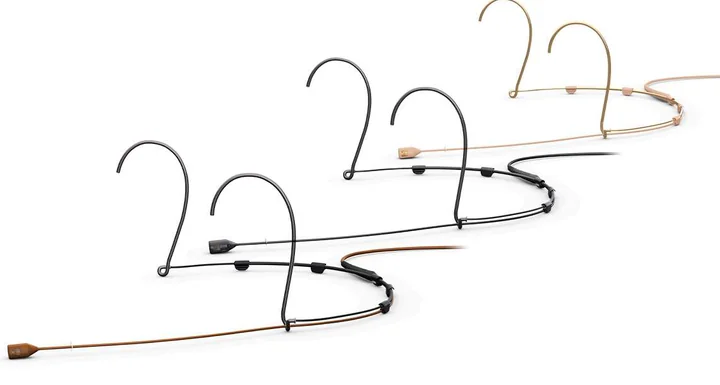
Miniature cardioid condenser headset (pre-polarised, 5.4 mm) for speech and vocals, CORE+ electronics
Approximate Some readings for this mic are uncertain; see the graphs.
- Type
- Condenser (electret)
- Pattern
- Cardioid
- Sensitivity
- −44 dBV/Pa
- Self-noise
- 26 dB(A)
- Max SPL
- 139 dB SPL
- Impedance
- 35 Ω computed
- Rated range
- 20 – 20k Hz
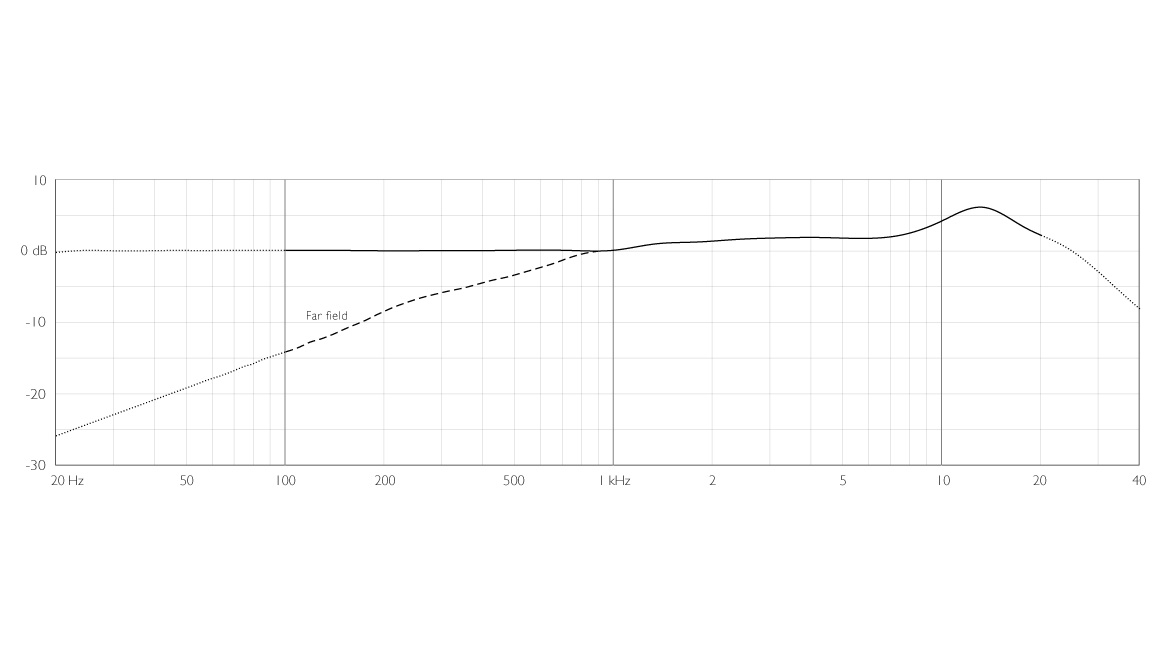
Frequency response: from the near far image. Captioned (on the product page) "Frequency response of the 4088 in near and far field"; the distances are not stated (the main graph gives 2-3 cm for near field). The far-field line is drawn dashed from 100 Hz to where it meets the near-field line (about 900 Hz) and dotted below 100 Hz; above that the two are one line.
Dashed: outside the rated range, or simulated (other angles and distances). Hover or tap the graphs for values.
Polar pattern
Polar pattern: from the polar image. Captioned (on the product page) "Typical directional characteristics of a 4088"; 5 dB per ring, centre -25 dB. Measuring conditions not stated. Approximate reading error up to about 1 dB; some frequencies are identified by reasoning, not by the legend: 500 Hz.
All specs
| From the product page | ||
|---|---|---|
| Capsule | Pre-polarised miniature capsule, 5.4 mm. "Microphone diameter: 5.4 mm (0.21 in)"; "Microphone length: 11 mm (0.5 in)". | |
| Sensitivity | −44 dBV/Pa (6 mV/Pa), nominal, ±3 dB at 1 kHz. "6 mV/Pa; -44 dB re. 1 V/Pa". | |
| Self-noise | 26 dB(A), typ. (max. 28 dB(A)) | |
| Self-noise (CCIR 468) | 38 dB, ITU-R BS.468-4, typ. (max. 40 dB) | |
| Max SPL | 139 dB SPL, THD < 1%, RMS (CORE+); also 142 dB SPL, THD < 1%, peak; also 137 dB SPL, THD < 0.5%, RMS; also 146 dB SPL, THD 10%, peak; also 134 dB SPL, THD < 1%, RMS (CORE; 2024 print); also 120 dB SPL, THD < 1%, RMS (Legacy, before CORE; 2024 print). "Distortion, THD < 0.5%: 137 dB SPL RMS, 140 dB SPL peak"; "Distortion, THD < 1%: 139 dB SPL RMS, 142 dB SPL peak"; "Max. SPL, THD 10%: 146 dB SPL peak". The 2024 print gives 134/137 dB (CORE), 120/123 dB (Legacy) and 144 dB peak at 10% (p. 2). | |
| Dynamic range | 116 dB, typ. (CORE+); also 111 dB, typ. (CORE; 2024 print); also 97 dB, typ. (Legacy; 2024 print). The 2024 print gives "Dynamic range - CORE: Typ. 111 dB" and "- Legacy: Typ. 97 dB" (p. 2). | |
| Output impedance | 35 ohm, rated, printed as "30 - 40 Ω". Not stated by the manufacturer: "Rated output impedance: 30 - 40 Ω"; the value is the middle of that range. | |
| Rated frequency range | 20 Hz to 20 kHz. "Frequency response: 20 Hz - 20 kHz". The 2024 print adds "Effective frequency range, ±2 dB, Near field 2-3 cm: 100 Hz - 20 kHz (4 - 6 dB soft boost at 15 kHz)" (p. 2). | |
| Powering | Wireless systems: 5 to 10 V through a DPA adapter; with the DAD9001 XLR adapter: P48 (works from 12 V). "For wireless systems Min. 5 V - max. 10 V through DPA adapter. With DAD9001: P48 (Phantom Power). Will work from 12 V". | |
| Current draw | 1.5 mA, typ., microphone; also 3.5 mA, with the DAD9001 XLR adapter | |
| Connector | MicroLock, TA4F Mini-XLR, 3-pin LEMO or Mini-Jack (for wireless packs); XLR through the DAD9001 adapter. "Connector: MicroLock, TA4F Mini-XLR, 3-pin LEMO, Mini-Jack". The 2024 print names MicroDot instead of MicroLock and the DAD6001-BC adapter. | |
| Weight | 14 g, incl. cable and MicroLock connector | |
| Dimensions | 5.4 × 11 mm. Microphone (capsule housing) diameter 5.4 mm, length 11 mm. Cable 1.2 m long, 1.6 mm thick. | |
| Cable | 1.2 m (3.9 ft), 1.6 mm (0.06 in) diameter | |
| Cable drive capability | Up to 300 m (984 ft) with the DAD9001 XLR adapter | |
| Polarity | Positively increasing sound pressure produces positive going voltage on the MicroLock pin | |
| Temperature range | -40 °C to 45 °C | |
| Relative humidity | Up to 90% | |
| From the spec sheet | ||
| Finish | black, beige or brown. "Color: Black, beige or brown". | p. 2 |
| Effective frequency range | ±2 dB, near field 2-3 cm: 100 Hz - 20 kHz (4 - 6 dB soft boost at 15 kHz) | |
| Versions | CORE+ (current, MicroLock); the 2024 print gives CORE and Legacy figures (MicroDot) | |
Documents
- 4088 CORE+ Directional Headset Microphone (product page specifications)
- 4088 Directional Headset Microphone (DPA document portal print)
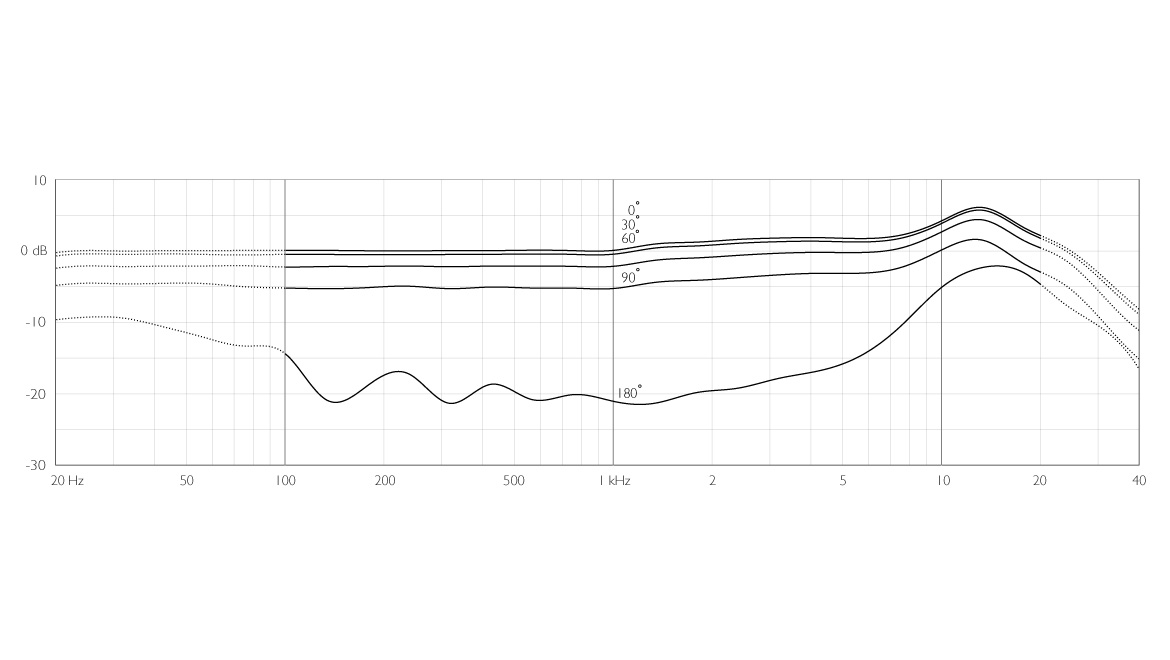
- Typical on and off-axis response of a 4088 microphone (graph image)
- Frequency response of the 4088 in near and far field (graph image)
- Typical directional characteristics of a 4088 (graph image)

Copies kept by Mic Archive, because manufacturers move and drop their documents. Each is © DPA Microphones, unchanged, with its original address.
Recommended for
Instruments whose sources name this mic, or an earlier version or variant of it.
Other mics
- AEA KU4
- AEA N22
- AEA N8
- AEA R44
- AEA R84
- AEA R88
- AEA R92
- AKG C 1000 S
- AKG C 12
- AKG C 12 VR
- AKG C 391 B
- AKG C 451 E
- AKG C 480 B ULS
- AKG C 535 EB
- AKG C214
- AKG C3000
- AKG C414 B-ULS
- AKG C414 XLII
- AKG C414 XLS
- AKG C451 B
- AKG C519 M
- AKG C636
- AKG D 12
- AKG D 20 B
- AKG D112
- AKG D40
- AKG D5
- AKG D7
- AKG P170
- AKG P220
- AKG P420
- Aston Origin
- Aston Spirit
- Aston Starlight
- Audio-Technica AE2500
- Audio-Technica AE4100
- Audio-Technica AE5100
- Audio-Technica AT2010
- Audio-Technica AT2020
- Audio-Technica AT2021
- Audio-Technica AT2031
- Audio-Technica AT2035
- Audio-Technica AT2040
- Audio-Technica AT2050
- Audio-Technica AT4021
- Audio-Technica AT4022
- Audio-Technica AT4033/CL
- Audio-Technica AT4040
- Audio-Technica AT4041
- Audio-Technica AT4047/SV
- Audio-Technica AT4050
- Audio-Technica AT4051b
- Audio-Technica AT4053b
- Audio-Technica AT4060
- Audio-Technica AT4080
- Audio-Technica AT5045
- Audio-Technica AT831b
- Audio-Technica ATM230
- Audio-Technica ATM25
- Audio-Technica ATM350
- Audio-Technica ATM450
- Audio-Technica ATM650
- Audio-Technica ES933
- Audio-Technica PRO 35
- Audio-Technica PRO 45
- Audio-Technica U853
- Audix ADX20i
- Audix D2
- Audix D4
- Audix D6
- Audix f6
- Audix FireBall
- Audix i5
- Audix MB5050
- Audix MB8450
- Audix OM5
- Audix OM7
- Austrian Audio OC16
- Austrian Audio OC18
- Austrian Audio OC818
- Austrian Audio OD303
- Avantone CK-1
- Avantone CV-28
- Behringer C-2
- Behringer ECM8000
- Behringer XM8500
- beyerdynamic M 130
- beyerdynamic M 160
- beyerdynamic M 201
- beyerdynamic M 260
- beyerdynamic M 380
- beyerdynamic M 422
- beyerdynamic M 69 TG
- beyerdynamic M 88 TG
- beyerdynamic M 99
- beyerdynamic MC 740
- beyerdynamic MC 834
- beyerdynamic MC 930
- beyerdynamic Opus 87
- beyerdynamic TG D71
- beyerdynamic TG V70d
- Blue Baby Bottle
- Blue Cactus
- Blue Hummingbird
- Blue Kiwi
- Blue Yeti
- Bluebird
- CAD D80
- CAD Equitek E100S
- CAD M179
- Cascade Fat Head II
- Coles 4038
- Countryman E6
- Crown GLM-100
- DPA 2011
- DPA 2012
- DPA 2015
- DPA 4006-TL
- DPA 4006A
- DPA 4011A
- DPA 4015A
- DPA 4017B
- DPA 4018A
- DPA 4041-SP
- DPA 4055
- DPA 4060
- DPA 4061
- DPA 4066
- DPA 4097
- DPA 4098
- DPA 4099
- DPA d:facto 4018V
- Earthworks DM20
- Earthworks M30
- Earthworks QTC1
- Earthworks QTC40
- Earthworks SR25
- Earthworks SR40V
- Earthworks SR69
- Earthworks TC20
- Electro-Voice 635A
- Electro-Voice N/D468
- Electro-Voice N/D767a
- Electro-Voice N/D868
- Electro-Voice ND44
- Electro-Voice ND46
- Electro-Voice ND66
- Electro-Voice ND68
- Electro-Voice ND76
- Electro-Voice ND76S
- Electro-Voice ND86
- Electro-Voice ND96
- Electro-Voice RE15
- Electro-Voice RE16
- Electro-Voice RE20
- Electro-Voice RE27N/D
- Electro-Voice RE320
- Electro-Voice RE410
- Electro-Voice RE50/B
- Electro-Voice RE500
- Electro-Voice RE510
- Electro-Voice RE90H
- Electro-Voice RE92H
- FLEA47
- Galaxy Audio CBM-5
- Heil PR 22
- Heil PR 30
- Heil PR 35
- Heil PR 40
- Josephson C42
- Josephson e22S
- Lawson L47MP Mk II
- LEWITT LCT 440 PURE
- LEWITT LCT 540 S
- Line Audio CM4
- Microtech Gefell M 221
- Microtech Gefell M 300
- Microtech Gefell M 930
- Microtech Gefell M 940
- Mojave MA-200
- Mojave MA-201fet
- Mojave MA-300
- Mojave MA-50
- MXL 603S
- MXL 770
- MXL 990
- MXL 993
- MXL V67G
- Neumann BCM 104
- Neumann BCM 705
- Neumann KM 131
- Neumann KM 140
- Neumann KM 183
- Neumann KM 184
- Neumann KM 184 D
- Neumann KM 185
- Neumann KM 84
- Neumann KM 85
- Neumann KM 86
- Neumann KMR 81 i
- Neumann KMS 104
- Neumann KMS 105
- Neumann M 147 Tube
- Neumann M 149 Tube
- Neumann M 49 V
- Neumann M 50
- Neumann MCM KK 14
- Neumann TLM 102
- Neumann TLM 103
- Neumann TLM 107
- Neumann TLM 127
- Neumann TLM 170 R
- Neumann TLM 193
- Neumann TLM 49
- Neumann TLM 50
- Neumann TLM 67
- Neumann U 47
- Neumann U 47 fet
- Neumann U 67
- Neumann U 87 (U 87 i)
- Neumann U 87 Ai
- Neumann U 89 i
- Neumann USM 69 i
- Oktava MK-012
- Pearl TL 44
- RCA 44-BX
- RCA 77-DX
- Royer R-10
- Royer R-101
- Royer R-121
- Royer R-122
- Royer R-122 MKII
- Royer SF-12
- Royer SF-2
- Royer SF-24
- RØDE Broadcaster
- RØDE K2
- RØDE M3
- RØDE M5
- RØDE NT-SF1
- RØDE NT-USB
- RØDE NT1
- RØDE NT1 Signature Series
- RØDE NT1-A
- RØDE NT1000
- RØDE NT2-A
- RØDE NT3
- RØDE NT4
- RØDE NT5
- RØDE NT55
- RØDE NT6
- RØDE NTG3
- RØDE NTG4+
- RØDE NTG5
- RØDE NTR
- RØDE Podcaster
- RØDE PodMic
- RØDE Procaster
- RØDE TF-5
- RØDE VideoMic NTG
- Samson C02
- Sanken CO-100K
- Sanken COS-11D
- Schoeps CCM 21
- Schoeps CCM 4
- Schoeps CMIT 5
- Schoeps MK 2
- Schoeps MK 21
- Schoeps MK 22
- Schoeps MK 2S
- Schoeps MK 4
- Schoeps MK 41
- Schoeps MK 4V
- Schoeps MK 5
- Schoeps MK 8
- Schoeps V4 U
- sE RNR1
- sE V Beat
- sE V Kick
- sE V7
- sE V7 X
- sE VR1
- sE VR2
- sE X1 S
- sE4400
- sE7
- sE8
- Sennheiser e 602-II
- Sennheiser e 604
- Sennheiser e 608
- Sennheiser e 609 silver
- Sennheiser e 614
- Sennheiser e 835
- Sennheiser e 840
- Sennheiser e 845
- Sennheiser e 865
- Sennheiser e 901
- Sennheiser e 902
- Sennheiser e 904
- Sennheiser e 906
- Sennheiser e 908 B
- Sennheiser e 914
- Sennheiser e 935
- Sennheiser e 945
- Sennheiser e 965
- Sennheiser MD 409
- Sennheiser MD 421
- Sennheiser MD 421-II
- Sennheiser MD 431 II
- Sennheiser MD 441 U
- Sennheiser ME 66
- Sennheiser MK 4
- Sennheiser MK 8
- Sennheiser MKE 600
- Sennheiser MKH 20 P48
- Sennheiser MKH 30 P48
- Sennheiser MKH 40 P48
- Sennheiser MKH 416
- Sennheiser MKH 50 P48
- Sennheiser MKH 60
- Sennheiser MKH 70
- Sennheiser MKH 800
- Sennheiser MKH 8020
- Sennheiser MKH 8040
- Sennheiser MKH 8050
- Sennheiser MKH 8060
- Sennheiser MKH 8090
- Shure 520DX "Green Bullet"
- Shure 55SH Series II
- Shure Beta 181
- Shure Beta 27
- Shure Beta 52A
- Shure Beta 53
- Shure Beta 54
- Shure Beta 56A
- Shure Beta 57A
- Shure Beta 58A
- Shure Beta 87A
- Shure Beta 91A
- Shure Beta 98/S
- Shure Beta 98AMP
- Shure Beta 98D/S
- Shure Beta 98H/C
- Shure CVO-B/C
- Shure KSM109
- Shure KSM137
- Shure KSM141
- Shure KSM27
- Shure KSM313
- Shure KSM32
- Shure KSM353
- Shure KSM42
- Shure KSM44
- Shure KSM44A
- Shure KSM8 Dualdyne
- Shure KSM9
- Shure MV7
- Shure MX183
- Shure MX185
- Shure MX202
- Shure PG52
- Shure PG57
- Shure PG81
- Shure PGA181
- Shure PGA27
- Shure PGA48
- Shure PGA52
- Shure PGA58
- Shure PGA81
- Shure PGA98H
- Shure SM137
- Shure SM27
- Shure SM4
- Shure SM48
- Shure SM57
- Shure SM58
- Shure SM63
- Shure SM7B
- Shure SM7dB
- Shure SM81
- Shure SM84
- Shure SM86
- Shure SM89
- Shure SM94
- Shure SM98
- Shure Super 55
- Shure VP88
- Sontronics APOLLO 2
- Sontronics DELTA 2
- Sontronics SIGMA 2
- Sontronics SOLO
- Sontronics STC-2
- Sony C-100
- Sony C-37A
- Sony C-38B
- Sony C-800G
- Studio Projects C4
- Superlux PRA383
- Superlux R102
- t.bone Ovid System CC 100
- Telefunken C12
- Telefunken ELA M 251E
- Telefunken ELA M 260
- Telefunken M60 FET
- TELEFUNKEN M80
- TELEFUNKEN M81
- TELEFUNKEN M82
- Telefunken TF11
- Telefunken TF51
- Warm Audio WA-14
- Warm Audio WA-19
- Warm Audio WA-251
- Warm Audio WA-44
- Warm Audio WA-47
- Warm Audio WA-47jr
- Warm Audio WA-8000
- Warm Audio WA-84
- Warm Audio WA-87 R2